Table Of Content

Medvedev suggests that the Romanovs’ proved willingness to attempt an escape was one of the reasons they were murdered. Along with the White enemy advance on Yekaterinburg, the Bolshevik decision to get rid of the Romanovs was arrived at. Meanwhile, Alexandra Feodorovna, Nicholas’ beloved spouse, wasn’t wasting time. With her four daughters (Olga, Tatiana, Maria, Anastasia), they were sewing family jewelry – diamonds and gems – into the seams of dresses and coats, so in future they would have something to live on. The bodies were recovered from the mine by the White Army in 1918, who arrived too late to rescue them.
Inside The Brutal Execution Of The Romanov Family - All That's Interesting
Inside The Brutal Execution Of The Romanov Family.
Posted: Sun, 09 Jul 2023 07:00:00 GMT [source]
Years Later, Czar and Family to Rest in Peace
Once a structure to dispense medicine to Oxford’s poor, its blue door still reads the words ‘St Nicholas House’, painted out in gold. The Imperial Family were shot in the cellar of the Ipatiev House by the Bolsheviks on the night of 16/17 July 1918, together with their faithful retainers, the maid Anna Demidova and the former court physician Dr Botkin. Unlike at Tobolsk, Gibbes had not been permitted contact with the Imperial Family.
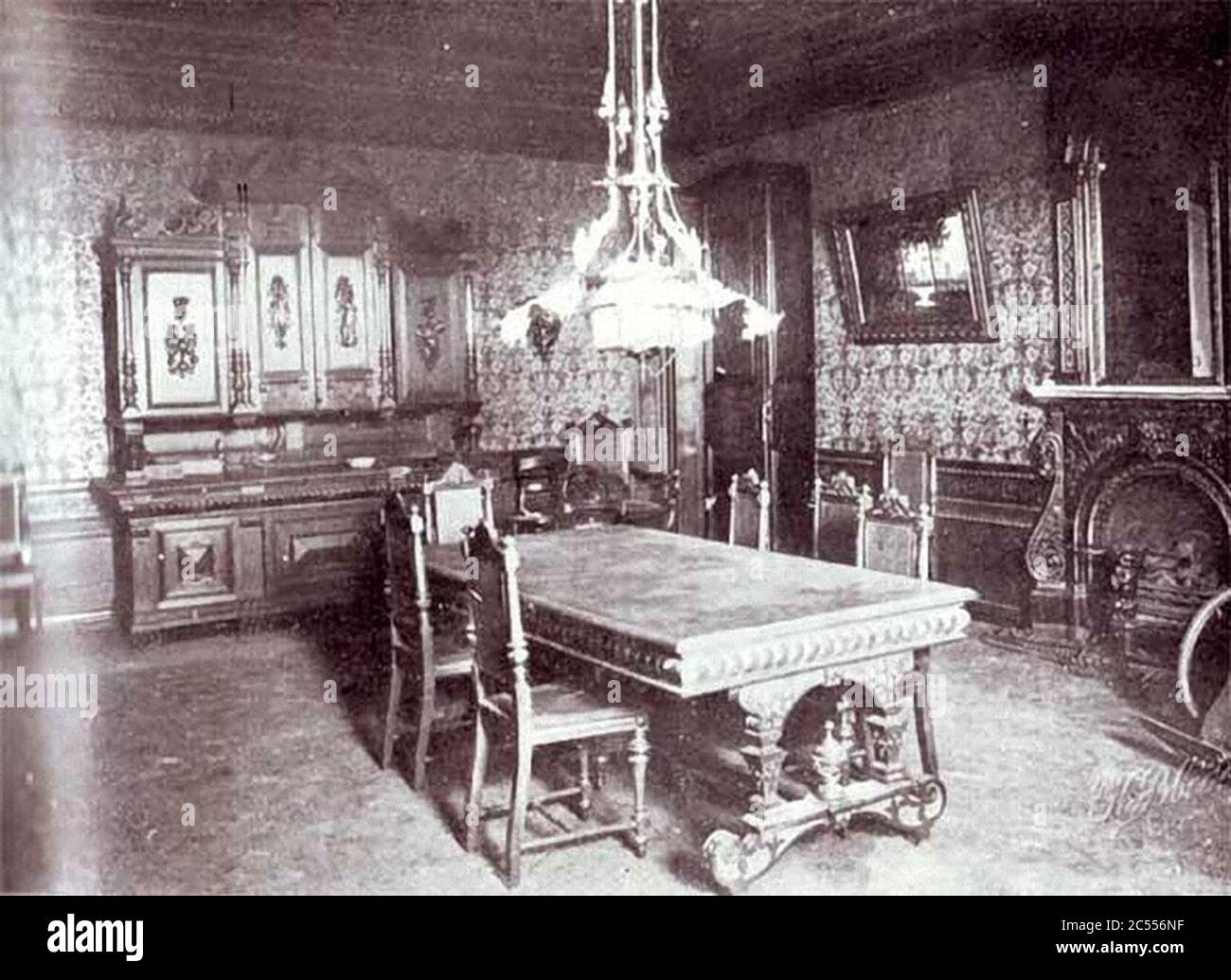
A chandelier and the fate of the Romanovs

For the Stahls, it became the blank screen on which they projected their dreams of a life together, a place to build a future, a family, and a house like no other. Card-playing security guards and an iron gate seal off the cluttered laboratory holding the royal remains of Nicholas II and his family--precautions taken since one of the czar’s ribs was pilfered three years ago. In the early hours of July 17, 1918, the Romanovs were gunned down by Bolshevik soldiers, then cut up in the basement of Ipatiev House in Yekaterinburg. The family had been exiled and detained there after Nicholas abdicated in March 1917 as the revolution was brewing. Because of Queen Victoria and her children’s marriages, many royal families are somehow connected to the Romanovs, earning her the nickname of “the grandmother of Europe,” according to Town & Country.
NRL journalist Paul Kent charged with affray over pub brawl
But Moscow’s powerful mayor, Yuri M. Luzhkov--ever mindful of the value of historical controversy in luring tourists--has called for the Romanovs’ burial to take place in his city. Nevertheless, earlier this month St. Petersburg Mayor Vladimir Yakovlev appealed to Yeltsin to decide in favor of burial of all at the imposing fortress and on the 80th anniversary of their execution this summer. All Russian monarchs since Peter the Great in the 18th century have been laid to rest in the imperial crypt of the Peter and Paul Fortress in St. Petersburg.
Life at the Ipatiev House
The intoxicated Peter Ermakov, the military commissar for Verkh-Isetsk, shot and killed Alexandra with a bullet wound to the head. He then shot at Tatiana, who ran for the double doors, hitting her in the thigh.[93] The remaining executioners shot chaotically and over each other's shoulders until the room was so filled with smoke and dust that no one could see anything at all in the darkness nor hear any commands amid the noise. In 1918, after the revolution and overthrow of the tsar, it was requisitioned by the government. After the expulsion of the Soviet authorities, the house returned for a short period to its previous owner, who soon emigrated from Soviet Russia / Environs of Yekaterinburg. In spring of 1918, the Romanov family was moved to Ekaterinburg, a city in Russia’s Urals. There they were held captive in a house which belonged to engineer Ipatiev, where they would ultimately be killed.
Also at the St Nicholas House, Gibbes kept other relics he had salvaged, which included an icon which had been given to him by Tsarina Alexandra at Tobolsk which she had signed and a handkerchief, bell and pencil-case which had formerly belonged to Tsarevich Alexei (J. C. Trewin, The House of Special Purpose, 145). There was also a coat of arms from the imperial yacht Standart and a collection of sleigh bells. In the Alexander Palace, the private residence of the Imperial Family at Tsarskoe Selo outside St. Petersburg, the bedrooms of the Grand Duchesses had been split between the elder pair, Grand Duchesses Olga and Tatiana and the younger, Grand Duchesses Maria and Anastasia. A notable feature of both had been stencil-type friezes on the bedroom walls. However, as the Ipatiev House episode shows, it can also be a fascinating vehicle for historical fiction, using the royals’ past to shed light on their present. Yakov Yurovsky, chief executioner of Tsar Nicholas II and his family, early 20th century.
Where the Romanovs were murdered: archived images
Seventy-three years later, after the fall of the Soviet Union, the newly formed Russian Federation government allowed the bodies to be exhumed. As The Crown shows, Prince Philip, who was Tsarina Alexandra’s grandnephew, gave his DNA to help identify the bodies. Thanks to his help, the Romanov’s remains were identified—and then properly buried in 1998 at Saint Petersburg’s Peter and Paul Cathedral. The legitimate male line of this branch is extinct with the death of Prince Dimitri Romanov in 2016.
What is the Order of the Companions of Honour - the new distinction given by King Charles to the Princess of Wales?
Desperate for news of them, he had taken to walking past the heavily guarded and double fenced Ipatiev House until the middle of June, hoping to have a glimpse of them from a window. Less than a year after the murder of the Imperial Family, Gibbes went from Omsk to Ekaterinburg to aid the lawyer Nicolas Sokolov, who had been charged as Investigating Magistrate for Cases of Special Importance of the Omsk Tribunal, to help with the enquiry into the fate of the Imperial Family. In 2016, a colleague of mine photocopied me the same page in his copy of the book, which had the chandelier reproduced in colour.
In the show, there is a flashback to Queen Elizabeth II’s grandfather King George V being asked by an aide whether they want to give asylum to the Romanov family, who had been kidnapped during the revolution in Russia. Their brother Alexei would have been 14 within two weeks of his murder.[citation needed] Alexei's elder sisters Olga and Tatiana were 22 and 21 years old at the time of the murder respectively. Also, striped material was found that appeared to have been from a blue-and-white striped cloth; Alexei commonly wore a blue-and-white striped undershirt. Throughout Feodor's reign (1584–1598), the tsar's brother-in-law, Boris Godunov, and his Romanov cousins contested the de facto rule of Russia.
We have no way of seeing into the true workings of their hearts and minds, of course, but we do know from everything their guards later said that Alexandra in particular had by now resolutely given herself up to God. She was in almost constant pain—her heart, her back, her legs, everything ached—and her faith was her only refuge. She seemed content to retreat into a state of religious meditation, spending most of her time being read to from her favorite spiritual works, usually by Tatiana.
This fragile object, beautiful in itself, witnessed the last days of the Grand Duchesses and hung in their room on the night that they were murdered, together with their family and their loyal retainers. It was not an object that had been owned by the Imperial Family or been added to their list of belongings during the time of their imprisonment, so doesn’t feature in Sokolov’s extensive inventory. As stated earlier, it was photographed in situ as part of Sokolov’s investigation, during the White occupation. Related objects listed amongst the items found in the stoves of the Ipatiev House included stems of artificial flowers, which fell away to ashes when touched, various glass fragments and the burner of a small lamp. “The weather is nice and warm, we have no news from the outside,” Nicholas wrote on July 13. It was to be his last ever diary entry – four days later, he, his family (Alexandra, four daughters and son) and four servants were shot in the basement of the Ipatiev House.
It was extraordinarily poignant to imagine Gibbes shuffling down this hallway in his long Orthodox robes or picturing which room off of the hallway would have been the chapel, which housed Gibbes’ imperial relics, including this fateful chandelier. I wonder if the present occupant of the flat that once contained Gibbes’ chapel realises that their room once housed items which belonged to Tsar Nicholas II and his family. The Ipatiev House Murano glass chandelier consists of white and red glass tulips, supported by wires – a strange parallel. When the whole family was reunited on 10/23 May, the four Grand Duchesses were assigned one room that they shared, which was located between the room in which the Tsar, Tsarina and Tsarevich Alexei slept and the room of the imperial family’s maid, Anna Demidova. Queen Elizabeth’s great-grandmother Queen Alexandra came from Danish royalty. She married King Edward VII of the United Kingdom, whereas her sister Maria married Czar Alexander of Russia.
Ioann Konstantinovich's wife, Elena Petrovna, was imprisoned in Alapayevsk and Perm, before escaping to Sweden and Nice, France. The Ipatiev House has the same name as the Ipatiev Monastery in Kostroma, where Mikhail Romanov had been offered the Russian Crown in 1613. The large memorial church "on the blood" has been built on the spot where the Ipatiev House once stood. For the Romanov family at the Ipatiev House, Tuesday July 16 in Ekaterinburg was much like any other day, punctuated by the same frugal meals, brief periods of recreation in the garden, reading and games of cards. Over the last three months, their lives had become deadened by the extreme constraints placed upon them and by a total lack of contact with the outside world. It was only the fact that they were still together, and in Russia, that kept them going; that and their profound religious faith and absolute trust in God.
But the supposed mine shaft that Yurovsky had selected for them to be dumped in turned out to be too shallow; local peasants would easily find the bodies and seek to preserve them as holy relics. And so, within hours, the mutilated corpses of the Romanov family, stripped of their clothes and the Tsaritsa’s jewels, which had been secreted in them, were hastily dug up. Yurovsky and his men then made a botched attempt to incinerate the bodies of Maria and Alexey. Sixty yards away, the rest of the family were hastily reburied in a shallow grave along with their servants. And they must all perish, in order to ensure, as Lenin insisted, that no 'living banner' (that is, the children) survive as a possible rallying point for the monarchists. But the murder of the children, which the Bolsheviks knew would provoke international outrage, must be kept secret for as long as possible.
But the restless 20th century saga of the murdered Romanovs may finally be coming to an end. But some local residents dismissed the procession and funeral as overly political or irrelevant rituals adding to the debts of a government that already is deeply in arrears on state wages and pensions. While those who have flourished in the freer atmosphere of the post-Communist era tend to acknowledge a need to correct the wrongs of their forebears, many Russians are simply too overwhelmed with the demands of survival to care much about political murders that took place decades ago.
The Ipatiev House, was a neat and tidy merchant's mansion - and a well guarded one too. Elizaveta Mavrikievna, widow of Konstantin Konstantinovich, escaped with her daughter Vera Konstantinovna and her son Georgii Konstantinovich, as well as her grandson Prince Vsevolod Ivanovich and her granddaughter Princess Catherine Ivanovna to Sweden. Her other daughter, Tatiana Konstantinovna, also escaped with her children Natasha and Teymuraz, as well as her uncle's aide-de-camp Alexander Korochenzov. In 2005 the coffin with her remains was moved to the Peter and Paul Fortress to be buried beside that of her husband. The transfer of her remains was accompanied by an elaborate ceremony at Saint Isaac's Cathedral officiated by Patriarch Alexy II of Moscow. Descendants and relatives of the Dowager Empress attended, including her great-grandson Prince Michael Andreevich, Princess Catherine Ivanovna of Russia, the last living member of the Imperial Family born before the fall of the dynasty,[23] and Prince Dmitri and Prince Nicholas Romanov.




No comments:
Post a Comment